You know how when you’re stuck in a traffic jam or in a crowded
means of public transport, the sheer number of people present there makes you
wonder just how many people live in your city.
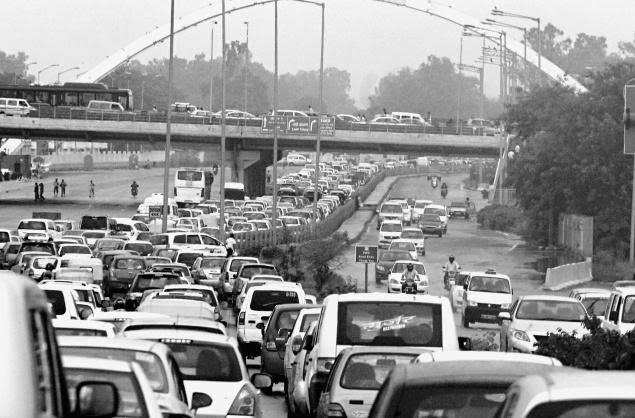
means of public transport, the sheer number of people present there makes you
wonder just how many people live in your city.
Delhi currently has a population of over 17 million people, more than 7 million cars on its roads, and is
ever expanding in area. In order to accommodate these large numbers, the Delhi government has
been constantly investing in development of infrastructure yet cannot keep up
with the growing mass of people. Flyovers, underpasses, flyways, elevated
roads, bridges, a thriving underground and overhead metro rail system, giant
fleet of public buses and auto-rickshaws, this is what we Delhiites have with
us, and yet every morning and evening, during rush hour, you find yourself
jostling for space in the giant blob of people.
ever expanding in area. In order to accommodate these large numbers, the Delhi government has
been constantly investing in development of infrastructure yet cannot keep up
with the growing mass of people. Flyovers, underpasses, flyways, elevated
roads, bridges, a thriving underground and overhead metro rail system, giant
fleet of public buses and auto-rickshaws, this is what we Delhiites have with
us, and yet every morning and evening, during rush hour, you find yourself
jostling for space in the giant blob of people.
If
you are in a car, a sea of red tail-lights greets you as you join the mess.
Travelling by bus? Better find a way to get in and out and hold on without
getting bashed by elbows and bags or being stamped on. Considering the metro?
Still the best option as it doesn’t deviate from its route, no jams, trains at
regular intervals guaranteed to drop you off at your destination in AC comfort.
Good right? Yea, but a lot of others have the same idea, and it’s another
jostle for space and dodging bags and limbs of other passengers, and if you
need to switch trains? I wish you luck, cuz you will need it.
you are in a car, a sea of red tail-lights greets you as you join the mess.
Travelling by bus? Better find a way to get in and out and hold on without
getting bashed by elbows and bags or being stamped on. Considering the metro?
Still the best option as it doesn’t deviate from its route, no jams, trains at
regular intervals guaranteed to drop you off at your destination in AC comfort.
Good right? Yea, but a lot of others have the same idea, and it’s another
jostle for space and dodging bags and limbs of other passengers, and if you
need to switch trains? I wish you luck, cuz you will need it.
This
is the situation on any given weekday. Now let’s add a traffic incident on a major
road intersection or route, say a collision, some sort of construction work, a
tipped over truck, a parade, or even just a broken down car. For all of you who
have ever travelled in Delhi by road, I’m sure you just had a flashback of some
of your own hellish experiences. All roads connected to affected route get
instantly jammed like a backed up toilet. Traffic jams stretching over
kilometres at a standstill, on roads which have no escape or alternatives. People
have died in these jams simply because medical attention couldn’t reach them.
is the situation on any given weekday. Now let’s add a traffic incident on a major
road intersection or route, say a collision, some sort of construction work, a
tipped over truck, a parade, or even just a broken down car. For all of you who
have ever travelled in Delhi by road, I’m sure you just had a flashback of some
of your own hellish experiences. All roads connected to affected route get
instantly jammed like a backed up toilet. Traffic jams stretching over
kilometres at a standstill, on roads which have no escape or alternatives. People
have died in these jams simply because medical attention couldn’t reach them.
You’d
think the traffic police is responsible for sorting out this mess, and it is,
but clearly they need to work on their traffic management techniques. The
officers would argue that if it weren’t for them, the mess would not be sorted
out till much later after more accidents. While that is correct to an extent,
it is also clear that it would be a chaotic traffic if they didn’t do their
job, they only manage to direct and conduct an organized traffic jam instead of
working swiftly and efficiently to avoid the mess altogether. Perhaps they are
not trained enough, or not given the proper tools to work efficiently, or they
are simply lazy, either way, the people on the road suffer and so do businesses.
Improving this situation would require a combined effort from all departments
involved, not just the traffic police. A funny thing to observe is that the
worst road design for traffic management is right in front of offices of the
Institution of Driving Training and Research.
think the traffic police is responsible for sorting out this mess, and it is,
but clearly they need to work on their traffic management techniques. The
officers would argue that if it weren’t for them, the mess would not be sorted
out till much later after more accidents. While that is correct to an extent,
it is also clear that it would be a chaotic traffic if they didn’t do their
job, they only manage to direct and conduct an organized traffic jam instead of
working swiftly and efficiently to avoid the mess altogether. Perhaps they are
not trained enough, or not given the proper tools to work efficiently, or they
are simply lazy, either way, the people on the road suffer and so do businesses.
Improving this situation would require a combined effort from all departments
involved, not just the traffic police. A funny thing to observe is that the
worst road design for traffic management is right in front of offices of the
Institution of Driving Training and Research.
Meanwhile
back in the traffic jam, as you sit in your car, listening to the radio or
talking with the person in the passenger seat, you’re stuck in a traffic jam
for the last hour having moved only a few metres, the sea of lights stretching
out ahead in to the horizon, you cannot help but wonder, “Where did all
these people come from??”
back in the traffic jam, as you sit in your car, listening to the radio or
talking with the person in the passenger seat, you’re stuck in a traffic jam
for the last hour having moved only a few metres, the sea of lights stretching
out ahead in to the horizon, you cannot help but wonder, “Where did all
these people come from??”